
$410 million. The largest construction loan in Coconut Grove's history, for a wellness brand.
THE WELL spent a decade building one of the most credible wellness memberships in the world. Its next move was not another clubhouse.
It was 194 homes, and half of them sold before anyone broke ground.
Hi, I'm Hannah, founder of Oyogo, and this is our Oyogo Edit.
Last week we wrote about a hospital group building a hotel. This week it's the same inversion running the other way: a wellness brand building homes, and a bank writing the largest cheque in the neighbourhood's history to fund it.
I've been watching wellness real estate for a while and mostly finding sauna-and-a-marketing-deck. This one is worth looking at properly, because of who is paying for it.
Hannah
For a decade, THE WELL has been building one of the most credible wellness memberships in the world out of its New York flagship. Integrative medicine, ancient healing practices and modern science woven into members' daily lives rather than sold as a weekend.
Coconut Grove is the next chapter. And the way the market has responded is the story.
The number that matters is not the price tag
The figure in circulation is $650 million, the development value reported when the project was announced. It's a real number, and it is not the interesting one.
In January 2026, Terra and AB Asset Management secured $410 million from Tyko Capital to build it, described as the largest construction financing in Coconut Grove's history. Ground was broken the same month. A $164.5m construction permit followed in July.
Read that again with a lender's eyes. A bank wrote the biggest construction cheque this neighbourhood has ever seen, and the underwriting rested on a wellness brand's ability to sell a way of living.
This is not one building. It is how wellness is changing where people live.
Step back from Coconut Grove for a moment, because the loan only makes sense against what is happening underneath it.
In June, Forbes published the 33 most anticipated new wellness openings, drawn from a Global Wellness Summit survey of the industry. The striking thing is not the list. It is that residences dominate it: Six Senses Residences Dubai Marina at 250 homes, Madison Grand in Melbourne at 398 across 41 storeys, Aman Miami Beach, Eywa in Dubai, The Wilds by Aldar. Asked what they were most looking forward to, the people who build this category largely named places to live rather than places to stay.
The Summit's own framing is blunter than ours. "Wellness is moving beyond the resort spa into the places people live, work, recover, and age." Susie Ellis, its chief executive, adds the commercial read: "the market is going mainstream, and that will move the needle significantly."
The Global Wellness Institute puts wellness real estate at $876 billion in 2025, up from $151 billion in 2017, compounding at 23.6% a year, roughly double the next-fastest wellness sector, and heading for $1.8 trillion by 2030. The US leads at $254bn, then China at $218bn. Asia-Pacific is the largest region at $350bn. Saudi Arabia has grown fastest of all, 85% annually since 2017.
Numbers that size stop being about spas. They are about where people want to live, and four shifts sit underneath them.
Wellness is becoming infrastructure, not amenity. Abu Dhabi's Marsa Al Saadiyat, 6.4m sq m and 58,000 residents at US$27.2bn, puts every home within 150 metres of an active route, across 140km of walking paths and a 46km cycling loop. The wellness argument is in the ground plan, not the treatment menu. You cannot value-engineer out a street.
Certification is arriving, and it changes the conversation. Fitwel and WELL now appear as line items in masterplans; Marriott has signed Fitwel across its branded residences. Once a building carries a rating, "wellness" stops being an adjective a marketing team chose and becomes something a third party checked.
The clinical is moving into the home. For twenty years the model was that you travelled to your wellbeing: a retreat, a spa week, a two-night reset. What is being built now assumes the opposite: that you live in it. Diagnostics, recovery and programming installed where you sleep, not where you holiday.
And ownership itself is loosening. Ameyalli in Utah has sold 81% of its first phase as co-ownership shares from around US$400,000, on a site with 28 geothermal springs. Wellness living is being unbundled from the ability to buy a whole house.
Put those together and the direction is clear enough. The question stops being does the hotel have a spa and becomes does the place I live make the healthy thing the easy thing.
Which brings us back to the Grove.
What is actually being built
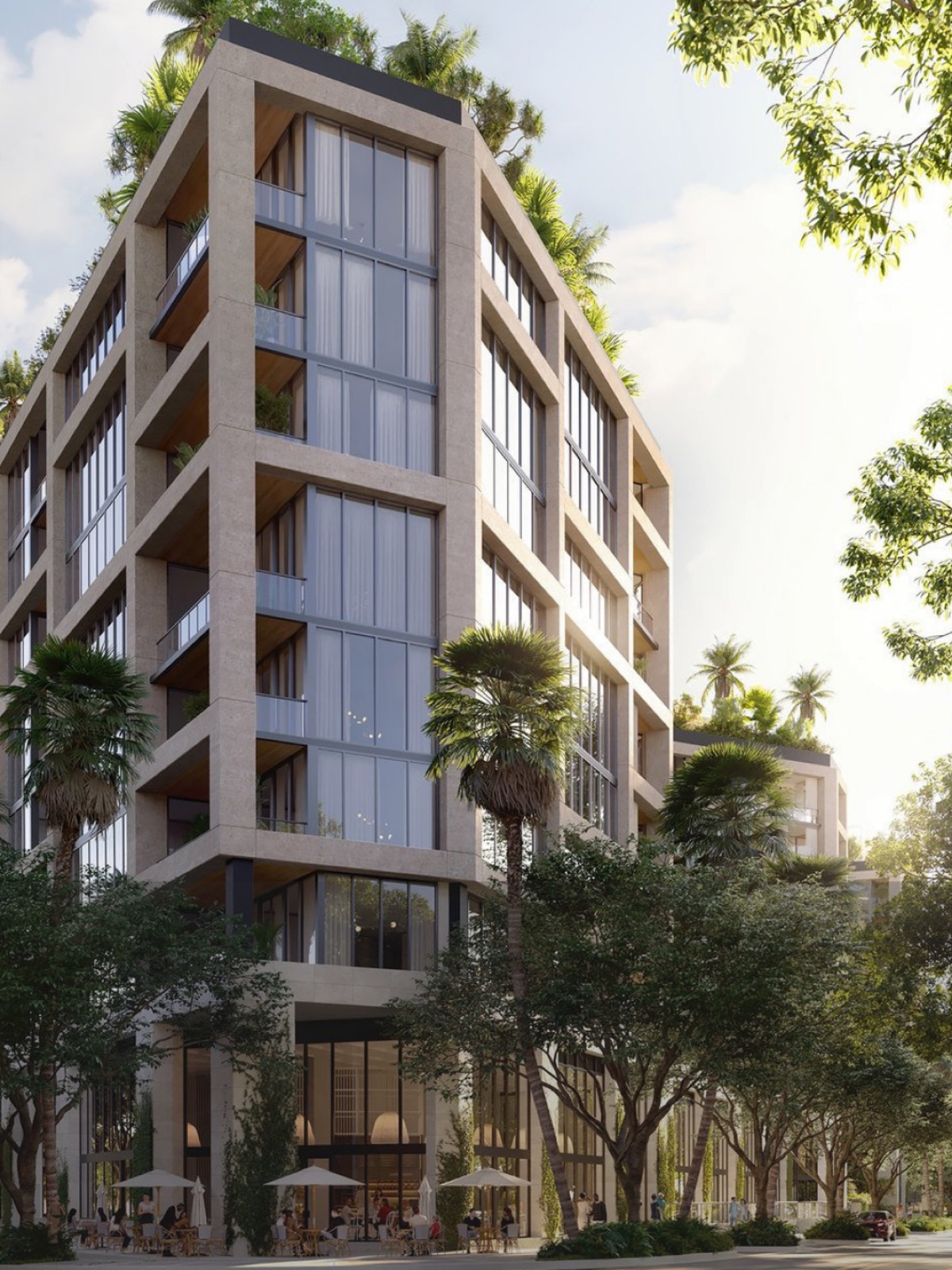
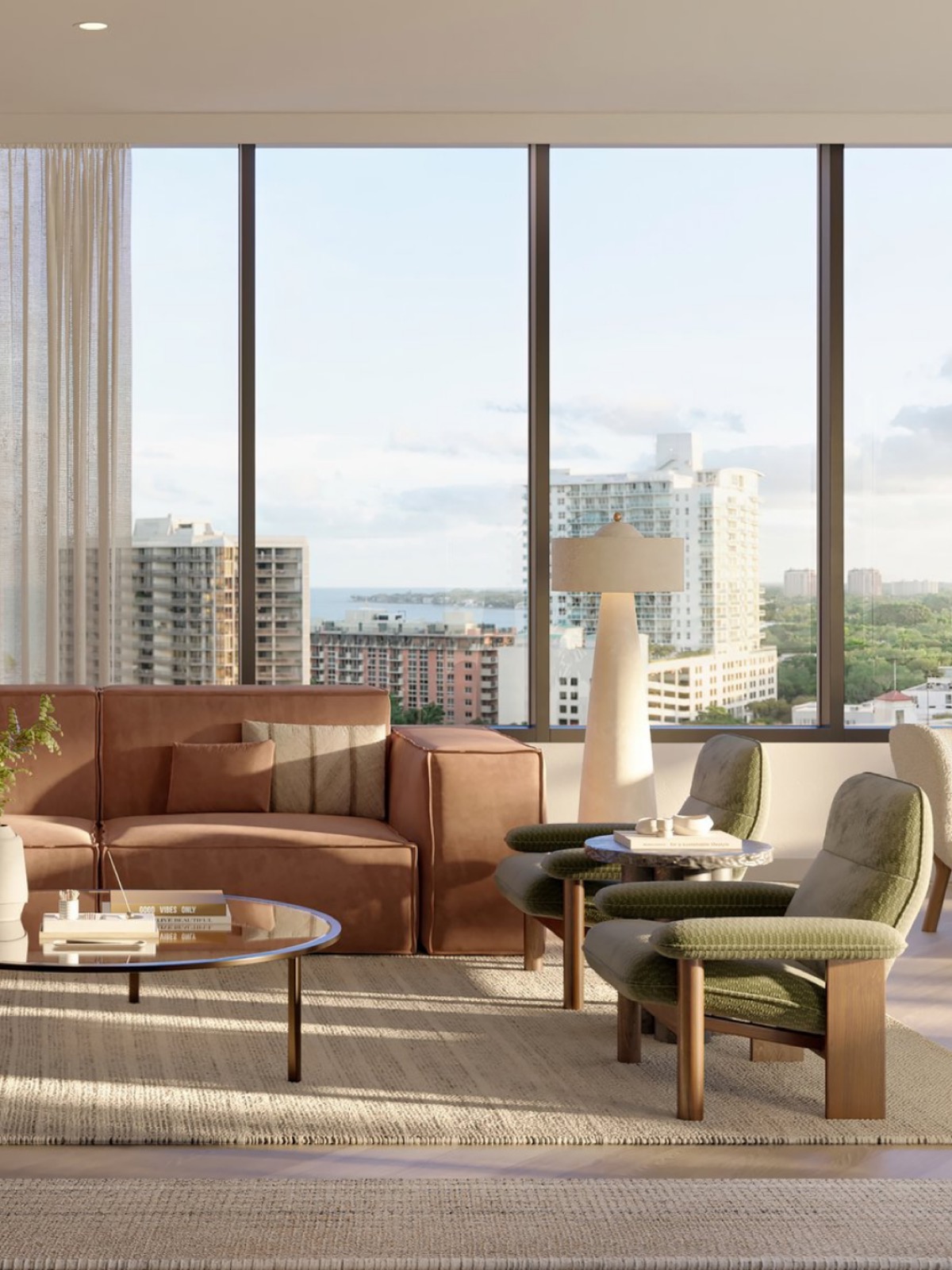
194 residences across eight floors at 2855 Tigertail Avenue, from one to four bedrooms, 960 to 4,200 sq ft, starting around $1.5m. Delivery is expected late 2028.
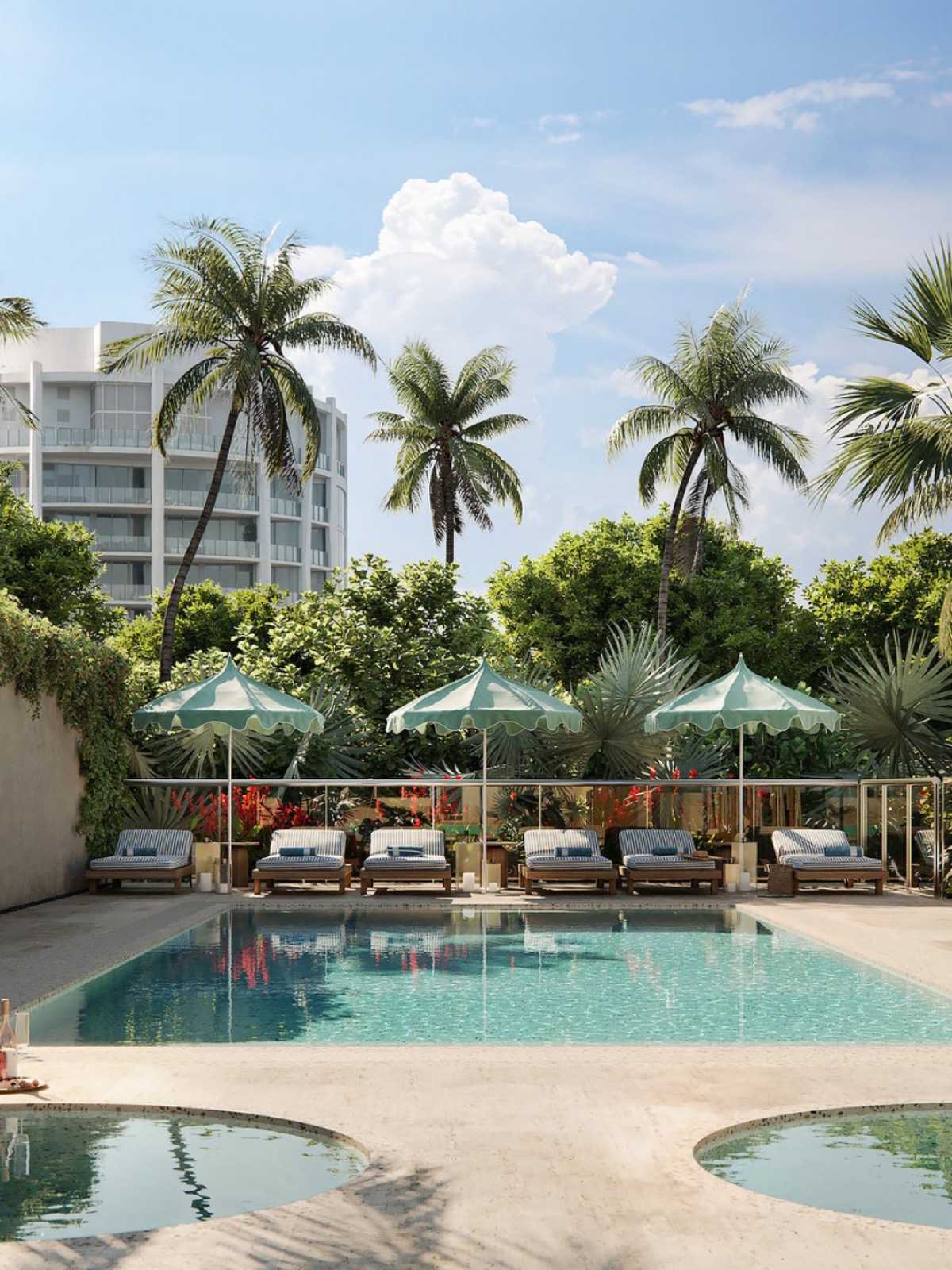
At the centre sits a 13,000+ sq ft wellness club, running functional medicine, physical therapy, hyperbaric therapy, IV therapy, thermal bathing and movement. Not a spa with a treatment list. A clinical spine, in a residential building.
The detail that separates it from most branded residences is how far the thinking runs into the homes themselves:
- Flex spaces in select residences designed for meditation, movement or in-room massage
- Red light therapy built into the primary closet, not a booking but a fixture
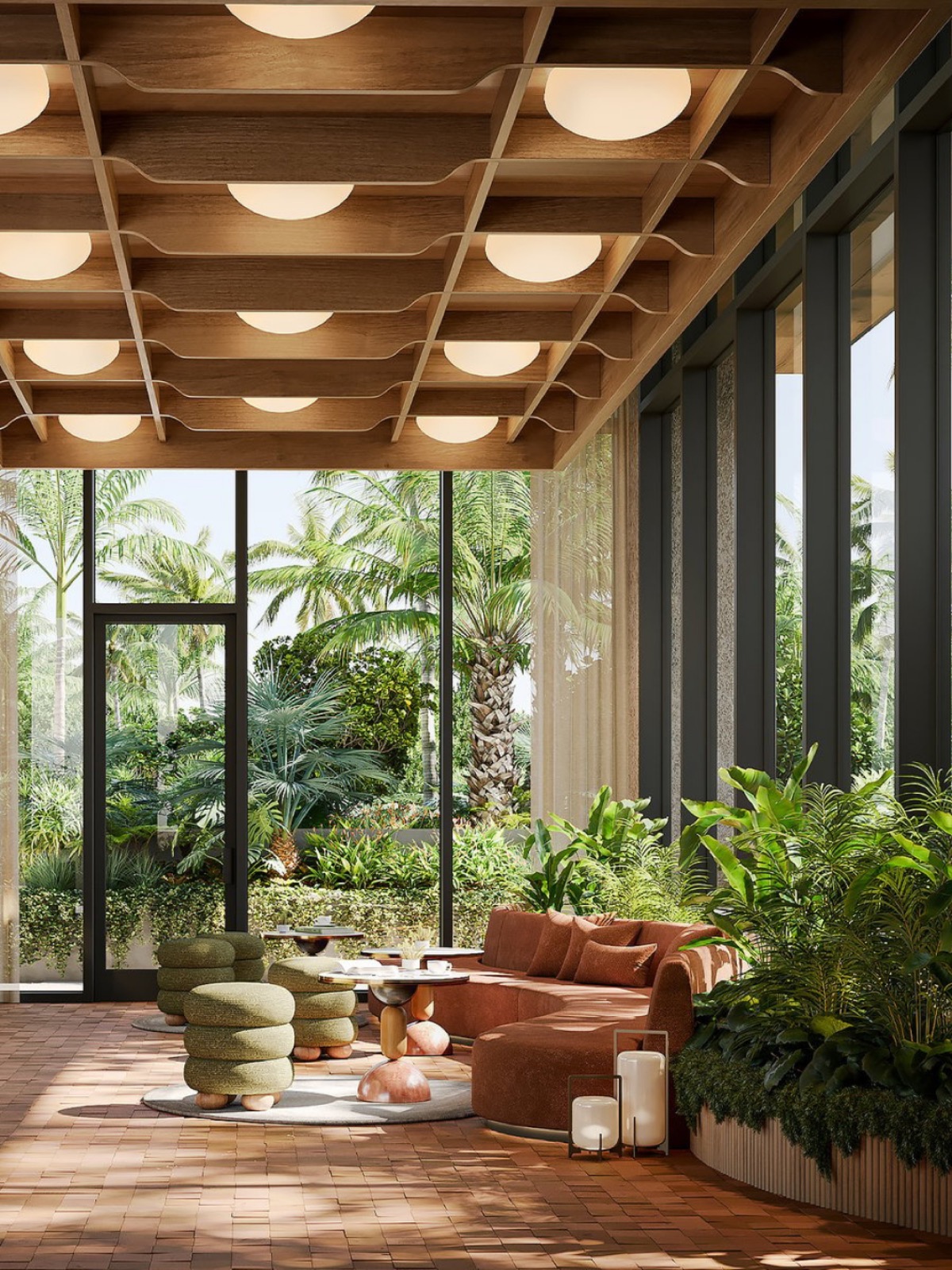
- Private garden entrances, and expansive glass opening onto planted surroundings
That last group is the tell. Anyone can add a gym. Designing recovery into a wardrobe is a decision made at drawing stage, by someone who intends the building to be used a particular way every day.
Why Coconut Grove, and why it works
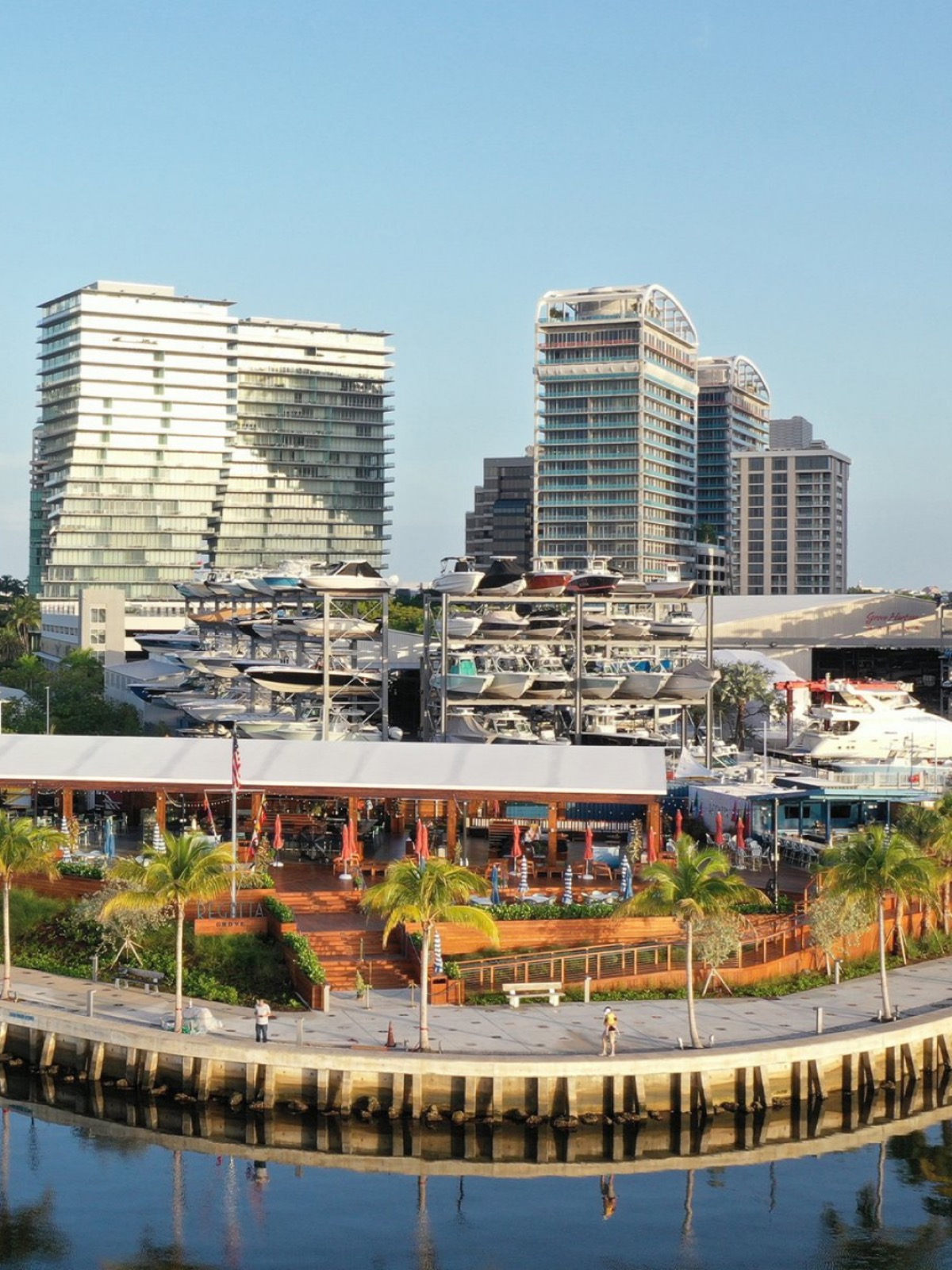
The Grove is Miami's oldest neighbourhood and its least Miami-like, defined by tree canopy, waterfront and a pace that sits at a deliberate remove from South Beach.
That matters commercially, not just atmospherically. A wellness proposition needs a setting that already supports it; sell "slow living" into a district built for nightlife and the product argues with its own address. Here the canopy does half the work before the building opens.
Who is leading, and who is following
One last thing worth noticing, because it is the pattern of the year.
Last week: a hospital group, BDMS, developing an US$865m hotel-and-residence complex in Bangkok. This week: a wellness membership brand developing homes in Miami. Both times the operator with the health credibility is leading, and hospitality or development is the partner rather than the author.
That is a reversal. For two decades wellness was the thing a developer bolted on near the end, when the budget allowed. It is now the thing underwriting the loan at the beginning.
Where we would push back
Two things this edition cannot yet tell you, and both matter.
Nobody has lived here. Delivery is late 2028. Every claim above is a drawing, a specification and a sales figure: evidence of intent and of demand, not of outcome. Half-sold-out means the market believes it. It does not mean it works.
Programming is the unknown. The single most common failure in this category is capital without operations: the facilities get built and nobody runs anything in them. THE WELL's advantage is that it already operates a membership daily in New York, which is exactly the muscle most developers lack. Whether that transfers into a residential building, with residents rather than members, is the open question.
What she actually said she wants
Last week's edition ran on reader comments, and one of them belongs here too. A retreat host, on what a good wellness experience actually produces:
That is the standard a building like this should be judged against in 2029. Not the hyperbaric chamber. Whether the people who live there know each other.
Watch the lender, not the brochure. A $410m construction loan is a harder signal than any amenity list, because someone with money at risk did the diligence. When you are assessing a wellness development, find out who financed it and on what basis.
Ask what is fixed and what is bookable. Red light therapy built into a closet is used daily. The same treatment down in the club is used twice. Fixtures beat facilities, and they are the cheaper decision, made earlier.
The site has to agree with the story. Coconut Grove's canopy and pace support this proposition. Plenty of wellness developments are sold into locations that quietly contradict them.
Judge it in 2029, not now. Half sold pre-construction proves demand, not delivery. We will come back to this one.
Best for: developers and investors weighing whether wellness is a premium worth underwriting, and buyers wanting recovery designed in rather than added on.
Less suited to: anyone wanting a verdict on the lived experience. Nobody has lived here yet, and we do not pretend otherwise.
One thing before you go
Reply and tell me. If you could design one wellness feature into your own home, something fixed rather than booked, what would it be? I read every one, and the best of them shape what we write next.
Sources
- $410m construction loan from Tyko Capital, largest in Coconut Grove history; groundbreaking January 2026. Source: The Real Deal, Bisnow, PROFILEmiami
- $650m development value. Source: Resident Magazine, 12 May 2025
- 194 residences, eight floors, 960 to 4,200 sq ft, from ~$1.5m, delivery late 2028; more than half sold. Source: Douglas Elliman / project sales reporting, 2026
- $164.5m construction permit issued July 2026. Source: South Florida permitting records as reported
- 13,000+ sq ft wellness club programming. Source: THE WELL / Terra project materials
- 33 most anticipated new wellness openings, drawn from a Global Wellness Summit survey; residences feature more heavily than resorts. Source: Forbes, 8 June 2026
- "Wellness is moving beyond the resort spa into the places people live, work, recover, and age" and Susie Ellis quotation. Source: Global Wellness Summit, via Forbes
- Wellness real estate at $876bn (2025), $151bn (2017), 23.6% CAGR, $1.8tn forecast by 2030; US $254bn, China $218bn, Asia-Pacific $350bn, Saudi Arabia 85% annual growth since 2017. Source: Global Wellness Institute
- Marsa Al Saadiyat: 6.4m sq m, 58,000 residents, US$27.2bn, 140km walking paths, 46km cycling loop, homes within 150m of an active route. Source: CLAD Global / Abu Dhabi Media Office
- Marriott signs Fitwel across branded residences. Source: Hospitality Net
- Ameyalli, Utah: 81% of phase one sold, co-ownership from ~US$400,000, 28 geothermal springs. Source: Spa Business
- WellEra Bangkok, US$865m, BDMS. Source: Manila Times / BDMS, as covered in our 10 August edition
- Reader comment from @oyogo.london, quoted without attribution
Researched and drafted with AI assistance. Every source is named above; the editorial judgement and verdicts are ours. Oyogo has no commercial relationship with THE WELL, Terra or this development. Images are developer renders.
The wellness hotels and residences worth knowing about.
A property edit every month, a location edit and a Sunday insight every week. Free.
The Oyogo Edit is delivered by Substack. Subscribing here creates your Substack subscription. Oyogo also keeps your email to send occasional updates about the platform. No spam, and you can unsubscribe from either at any time. See our privacy policy.
The leading voice in wellbeing tourism · @oyogo.london · @hann_oyogo